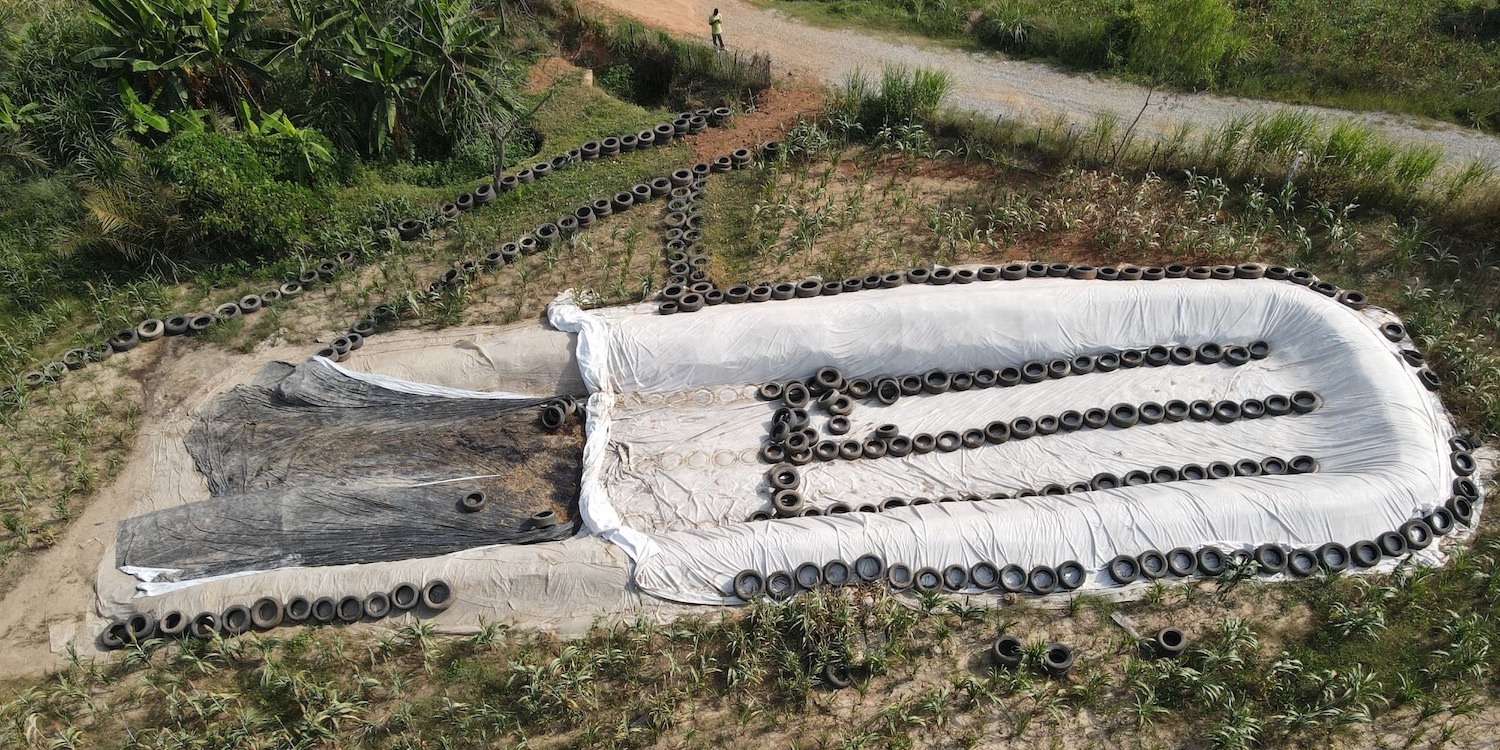
Silage
Silage is fermented animal fodder, primarily made from grass, maize, or other crops, that is chopped, compressed, and stored in an anaerobic (oxygen-free) environment. This fermentation process, driven by lactic acid bacteria, lowers the pH to preserve the nutrients and make it a high-quality feed for livestock, especially during winter.
Our Approach
At Almat Livestock & Dairy, our silage production is an integral part of our sustainable feed management system, ensuring year-round nutrition and food security for our cattle, sheep, and goats. We produce high-quality silage primarily from Napier and Brachiaria grasses, Guinea Corn, and Maize, harvested at their optimal growth stage to preserve maximum nutrients, moisture, and digestibility. The forage is carefully chopped, compacted, and stored under airtight conditions to promote natural fermentation, creating a rich, energy-dense feed that supports animal health, growth, and milk production. Our silage programme reduces waste, stabilizes feed supply during dry seasons, and reflects our commitment to efficient, environmentally responsible livestock farming.
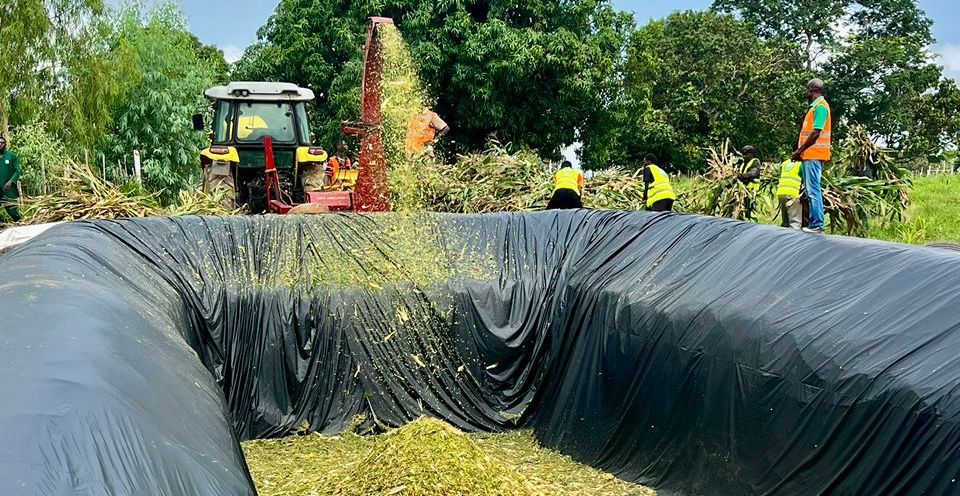
Education Corner - Silage FAQs
Silage is preserved green forage—such as Napier or Brachiaria grass—fermented under airtight conditions to retain its nutrients and energy value. It provides a reliable, high-quality feed source for livestock, especially during dry or feed-scarce seasons, ensuring consistent milk and meat production year-round.
At Almat Livestock & Dairy, we harvest nutrient-rich grasses at their peak, chop them finely, and compact them into airtight silos or bunkers to encourage natural fermentation. This process locks in nutrients and prevents spoilage, producing a rich, palatable, and energy-dense feed that supports healthy, productive animals.
Silage offers numerous advantages—it improves animal nutrition, boosts milk and meat yield, and ensures feed availability throughout the year. It also reduces feed costs, minimizes waste, and supports sustainable farming by efficiently utilizing farm-grown forages.